Showing posts with label moon days. Show all posts

Tuesday, May 27, 2014

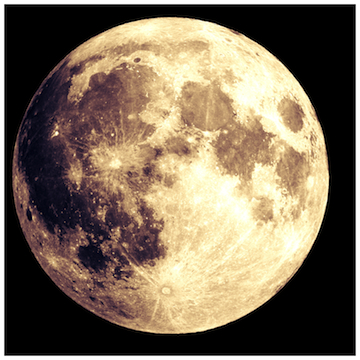
Moon Day

Wednesday, May 28.
No asana practice, just rest!

Upcoming moon days:
Fri 6/13, Fri 6/27, Fri 7/11, Fri 7/25, Sun 8/10, Sun 8/24
Wednesday, January 15, 2014

Moon Days 2014

Days of rest from asana practice.  Here's why.
Moon days might vary depending on where you live.  Check with your teacher for your local dates.

1/15
1/30
2/14
2/28
3/16
3/30
4/14
4/28
5/13
5/28
6/12
6/26
7/11
7/26
8/10
8/24
9/8
9/23
10/7
10/23
11/6
11/21
12/5
12/21

Sunday, February 24, 2013

Tuesday, August 14, 2012

Moon Days 2012

In keeping with the tradition of Sri K. Pattabhi Jois, the Albuquerque Ashtanga Yoga Shala is closed on the following "moon days" for students and teachers to have a day of rest from asana practice.

January 9th, Monday, Full Moon

January 23rd, Monday, New Moon


February 7th, Tuesday, Full Moon

February 21st, Tuesday, New Moon


March 8th, Thursday, Full Moon

March 22nd, Thursday, New Moon


April 6th, Friday, Full Moon

April 22nd, Sunday, New Moon


May 6th, Sunday, Full Moon

May 20th, Sunday, New Moon


June 3rd, Sunday, Full Moon

June 19th, Tuesday, New Moon


July 3rd, Tuesday, Full Moon

July 18th, Wednesday, New Moon


August 1st, Wednesday, Full Moon

August 17th, Friday, New Moon

August 31st, Friday, Full Moon


September 16th, Sunday, New Moon

September 30th, Sunday, Full Moon


October 15th, Monday, New Moon

October 28th, Sunday, Full Moon


November 13th, Tuesday, New Moon

November 28th, Wednesday, Full Moon


December 14th, Friday, New Moon

December 28th, Friday, Full Moon


Monday, June 18, 2012

{Moon Day} Tuesday, June 19 New Moon

Next Moon Day: Tuesday, June 19, 2012
No classes, take rest!
Full list of 2012 Moon Days

Why?
From Shri K. Pattabhi Jois via the Ashtanga Yoga Shala:
"That day is very difficult day. Two stars one place (conjunction) is going. New moon also, full moon also. That day very dangerous day. You (take) practice (on that day), anyone can have a small pain starting. That pain is not going very quickly. Long time he is taking. Some broken possible. That is why that day don’t do." continue reading

Friday, January 6, 2012

Why we don't practice on Moon Days


  • From Shri K. Pattabhi Jois at the Ashtanga Yoga Shala:
    "That day is very difficult day. Two stars one place (conjunction) is going. New moon also, full moon also. That day very dangerous day. You (take) practice (on that day), anyone can have a small pain starting. That pain is not going very quickly. Long time he is taking. Some broken possible. That is why that day don’t do."
    source

     
  • From Richard Freeman at the Yoga Workshop:
    "Observing this restraint to practice can be helpful in not becoming too attached to practice and routine. It also provides time for the body to rest and recuperate."
    source 

    "I
    t’s part of the traditional approach to take time off during the new and full moons. This is partly due to the Indian astrological belief that it is not auspicious to do certain things on moon days. Because we are part of this lineage, we have chosen to honor the moon days in this way.


    In addition, once you practice on a daily basis (six days a week is recommended), you’ll notice that being invited to take a day off is a luxury. The body can rest (after all the ashtanga practice is physically demanding) and on moon days you feel like you have a huge chunk of unspoken for “free time” when you’re used to daily practice. 
    source 

     
  • From Tim Miller at the Ashtanga Yoga Center:
    "
    Like all things of a watery nature (human beings are about 70% water), we are affected by the phases of the moon. The phases of the moon are determined by the moon’s relative position to the sun. Full moons occur when they are in opposition and new moons when they are in conjunction. Both sun and moon exert a gravitational pull on the earth. Their relative positions create different energetic experiences that can be compared to the breath cycle. The full moon energy corresponds to the end of inhalation when the force of prana is greatest. This is an expansive, upward moving force that makes us feel energetic and emotional, but not well grounded. The Upanishads state that the main prana lives in the head. During the full moon we tend to be more headstrong.

    The new moon energy corresponds to the end of exhalation when the force of apana is greatest. Apana is a contracting, downward moving force that makes us feel calm and grounded, but dense and disinclined towards physical exertion.

    The Farmers Almanac recommends planting seeds at the new moon when the rooting force is strongest and transplanting at the full moon when the flowering force is strongest.

    Practicing Ashtanga Yoga over time makes us more attuned to natural cycles. Observing moon days is one way to recognize and honor the rhythms of nature so we can live in greater harmony with it."  source

"I had one friendly comment to pass on about the ‘anandhyanana’ days: 
It is possible that the student who asked you about any prohibition of practicing yoga on the full or new moon days was doing so because of the observances of Pattabhi Jois. Much has been made of this observance, with all sorts of ideas about why he does this, and what significance it may have. However, the matter is quite simple. As you know, the Maharaja’s Pathashala (Sanskrit College) was closed each month for classes on the moon days, and the day before and after. Studies were continued by the students, but no new lessons taught. One reason for this was that on amavasya and purnima, certain rituals had to be performed by the teachers and students alike, who are all brahmins – for example, the pitr tarpana which needs to be performed on amavasya, and the ritual bathing the day after the moons – all these things take time to be performed. As well, though I have never been able to find the reference, Pattabhi Jois used to quote to us – and I also heard this from my old Bhagavad Gita teacher in Mysore – that if a teacher teaches new subjects on the moon days, his knowledge will decline, and on the day before or after, the knowledge of the student will decline! Perhaps you might know where this reference comes from? 
When I spoke to Pattabhi Jois’s astrologer while interviewing him for the Guruji book, he concurred with the idea that it has something to do with the idea of as above, so below: our mind is the moon, and waxes, wanes, and retains information in a similar cycle as the moon in the sky. 
Since Pattabhi Jois was a student at the Maharaja’s Pathashala, and then was the Professor of Yoga there from 1937 to 1973, this became a habit and observance for him. Since he held the view that yoga was a practice of Vedic origin, and that the knowledge of the Upanishads was to be accessed only through the doorway of asanas and pranayama, he ascribed the same observances to teaching them as he did to teaching Veda. He further used to say that on the full and new moon days, there was a particular conjunction of nakshatras that made it easier to get injured, and that the injury would take longer to heal. I have never been able to verify this through jyotish; perhaps this is something that he learned from his father, who was an accomplished jyotishi. 
Pattabhi Jois knew quite a bit too — the name Jois is a South Indian corruption of Jyotish, and astrology was in his family tradition. I say all this to make the simple point that Pattabhi Jois had certain habits from the time he was 14. Why he had these habits is interesting, and though we may not be brahmins, or even Indian, as his students it is good to understand why certain things were done by him, and accept that if he felt them important enough to follow, that they are applicable to us too. But we should not go making a big thing of it and creating all sorts of fantastical ideas! 
Below is a funny story to illustrate what happens when we (for example, Ashtanga Yoga students!) do not take the time to investigate simple things in a rational manner: 
A saintly scholar used to give a class on Bhagavad Gita each evening beneath a tree near a village. He had a pet cat, and this cat would sometimes run through the crowd, making a disturbance. As a result the sage began to tie the cat to the tree during the class. After some time the speaker shuffled off his mortal coil. One of his disciples continued to give the Bhagavad Gita class under the tree, and continued to tie the cat to the tree during the class. After some time the cat passed away, and the disciple bought another cat. After three generations a disciple wrote a paper on the sacred tradition of tying a cat to the tree while giving a class on Bhagavad Gita. 
So, all that being said, I think that the moon day/practice observance should be followed by the Ashtanga Yoga students out of respect for Pattabhi Jois and his methods. The purpose of following these things, and submitting ourselves to a lineage, is to create humility and thoughtfulness in the student. We will (most likely) not go to hell if we practice on these days, but surrendering oneself to a lineage has its own charm and effect on our character, so why should we not try it? I do not believe that all yoga students should refrain from practice on these days – they too should follow the observances of their teachers, and hopefully by aligning our minds with higher principles, we will all find happiness in our practices. On moon days or not!" source
  • From David Miliotis at the Ashtanga Yoga Practice:
    "Why Vedic moon days differ from Western moon days:

    In Vedic astrology, the lunar cycle, is divided into 30 tithis; 2 of these tithis are called full (pūrṇimā) & new (amāvasyā) and have been loosely translated as full & new ‘moon days’. The tithi is a specific time period that begins and ends based on its lunar cycle - irrespective of the daily solar cycle. The Western method for determining full & new moon days is to simply considered on which day the moon happens to be exactly full or new. When Guruji would speak of full & new moon days, he was thinking of their respective tithis. For this reason, we too follow the Vedic Pañcāṅga calendar system - just as Guruji did.
    " source

    Thursday, March 3, 2011

    Moon Day Friday

    Friday, March 4th is a moon day. There is no class, take rest!

    Tuesday, February 15, 2011

    Tuesday, January 18, 2011

    Wednesday Moon Day


    Wednesday, January 19th is a moon day. There is no class, take rest.

    All 2011 moon days here.
    Why we observe moon days here.

    Thursday, December 9, 2010

    Tuesday, November 16, 2010

    Moon Day + Thanksgiving Weekend

    Next Moon Day: Sunday, November 21

    Thursday, November 25th: 8-9:30am Led replaces Mysore (sign up here)
    Friday, November 26th: No class
    Sunday, November 28th: Regular schedule

    Thursday, December 2: New led class Tue/Thurs 3:30pm at 112 North 6th.

    Monday, October 25, 2010

    2011 Ashtanga Yoga Moon Days


    A list of full and new moon days for 2011. Ashtanga practitioners take this time off for rest. Find out why by clicking here.

    January 4th, Tuesday, New Moon
    January 19th, Wednesday, Full Moon

    February 2nd, Wednesday, New Moon
    February 18th, Friday, Full Moon

    March 4th, Friday, New Moon
    March 19th,Saturday, Full Moon

    April 3rd, Sunday, New Moon
    April 18th, Monday, Full Moon

    May 3rd, Tuesday , New Moon
    May 17th, Tuesday, Full Moon

    June 1st, Wednesday, New Moon
    June 15th, Wednesday , Full Moon

    July 1st, Friday, New Moon
    July 15th, Friday, Full Moon
    July 30th, Saturday, New Moon

    August 13th, Saturday, Full Moon
    August 29th, Monday, New Moon

    September 13th, Monday, Full Moon
    September 27th, Tuesday, New Moon

    October 12th , Wednesday,Full Moon
    October 26th, Wednesday , New Moon

    November 10th, Thursday, Full Moon
    November 25th, Friday , New Moon

    December 10th, Saturday, Full Moon
    December 24th, Saturday New Moon

    timeanddate.com

    Tuesday, September 21, 2010

    Moon Day Theory #5 {Dena Kingsberg}

    Next Moon Day: Thursday, September 23, 2010.

    From Dena Kingsberg:

    "Both full and new moon days are observed as yoga holidays in the Ashtanga Yoga tradition.

    What is the reasoning behind this?

    Like all things of a watery nature (human beings are about 70% water), we are affected by the phases of the moon. The phases of the moon are determined by the moon's relative position to the sun. Full moons occur when they are in opposition and new moons when they are in conjunction. Both sun and moon exert a gravitational pull on the earth." read on

    See all 2010 moon days

    Saturday, September 4, 2010

    Moon Day Theory #4 {Karyn Grenfell}

    Next Moon Day: Wednesday, September 8, 2010.

    From Karyn Grenfell at Blue Lotus Ashtanga:

    "Through practising Yoga we become aware of our own tendencies and the natural cycles that occur within and around us. Hopefully, over time we are able to function more harmoniously with ourselves and with the environment we live in.

    Observing moon days connects us with the functioning of the universe and makes us aware of the effect the universal energy can have on us individually." read on

    Friday, June 18, 2010

    Ashtanga Yoga 2010 Moon Days

    Ashtanga practitioners take the day of a full and new moon as a day of rest from asana practice. To learn more, click here.
    To view current moon phase, click here.

    January 15 Friday
    January 30 Saturday
    February 14 Sunday
    February 28 Sunday
    March 15 Monday
    March 30 Tuesday
    April 14 Wednesday
    April 28 Wednesday
    May 14 Friday
    May 27 Thursday
    June 12 Saturday
    June 26 Saturday
    July 11 Sunday
    July 26 Monday
    August 10 Tuesday
    August 24 Tuesday
    September 8 Wednesday
    September 23 Thursday
    October 7 Thursday
    October 23 Saturday
    November 6 Saturday
    November 21 Sunday
    December 5 Sunday
    December 21 Tuesday